
In masks, it serves as a “breath guardian” blocking viruses; in water purifiers, it acts as a “water purification pioneer” filtering impurities. Both are meltblown nonwoven fabrics, but why can they shine brilliantly in such disparate fields? Today, let’s explore the differences in their “dual lives”.
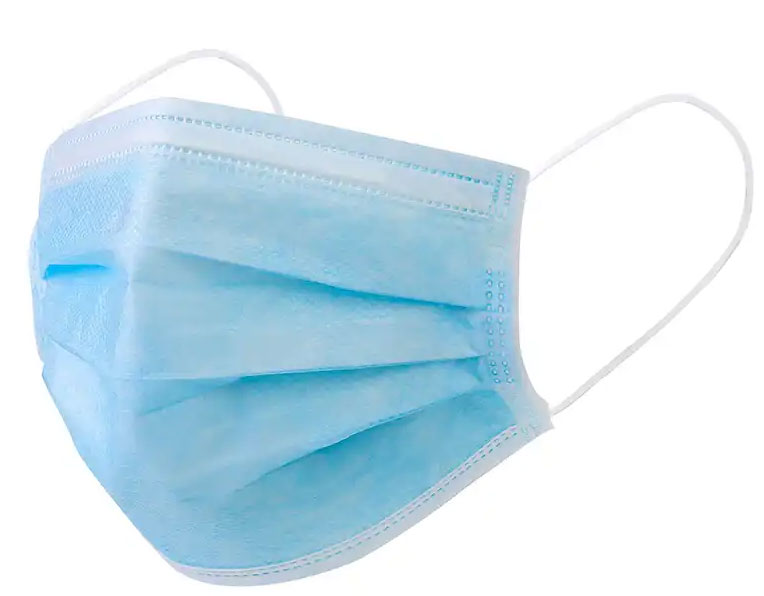
First Aspect: The “Goalkeeper” in Air Filtration
- Core mission: Intercept aerosols, particulate matter, bacteria, and viruses.
- Technical Features:
- Ultra-fine fibers: Create a maze-like tortuous channel to physically intercept particles.
- Electret charging: Core skill! Capture particles far smaller than the fiber gap through electrostatic adsorption.
- Low resistance: It must ensure smooth breathing while being efficient.
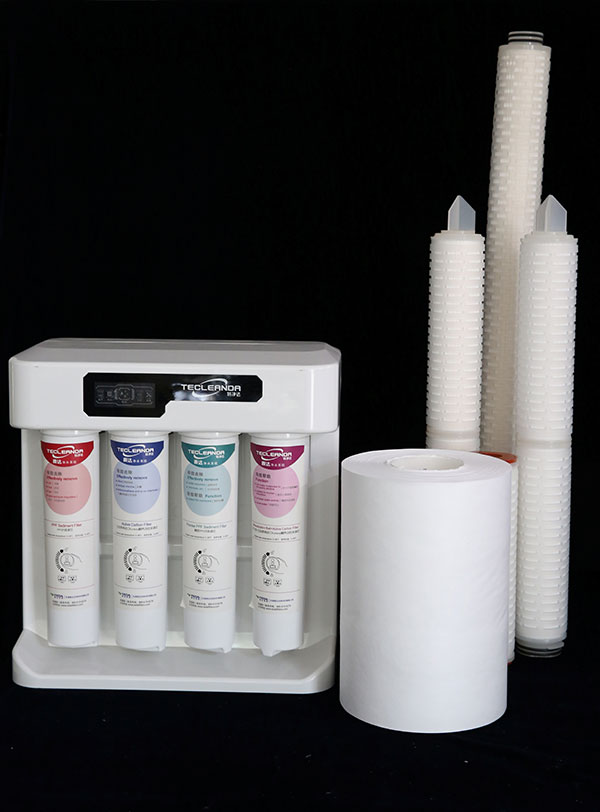
Second Aspect: “Patrol Soldiers” in Liquid Filtration
- Core mission: Remove suspended and sedimentary matter from liquids such as water and oil.
- Technical features:
- Key material requirements: It must be resistant to corrosion and hydrolysis. This is where specialty materials such as PBT (polybutylene terephthalate) come into play, as their chemical stability far exceeds that of ordinary PP.
- Accuracy classification: Like a sieve, it has clear pore size grades (such as 1μm, 5μm, 10μm) specifically designed to intercept impurities of different sizes.
- Structural toughness: It needs to withstand the impact of liquid pressure and flow rate, with a denser structure and higher strength requirements.
Born from the Same Root, Yet Dreaming Differently
Although originating from the same melt-blowing technology, they have taken diverging paths towards specialization due to the different media they are designed to handle (gas vs. liquid):
- Air filters are “skilled” players who rely on “electrostatic magic” to win by trickery.
- Liquid filters are “strength-type” players, relying on their “material and structure” to overcome ingenuity with brute force.
From safeguarding breath to purifying water sources, the dual-sided life of melt-blown fabric demonstrates the wonderful adaptability of material science. The next time you drink a glass of clear water or take a deep breath of fresh air, you may think of this ubiquitous “invisible guardian”.