
We all know that the core of a mask lies in the meltblown layer in the middle, which can block viruses. But have you ever thought that its fiber gaps are actually much larger than the size of viruses, just like a fishing net trying to catch small fish but the mesh is too big? So how does it achieve efficient filtration? The answer lies in a magical physical phenomenon – electrostatic adsorption.
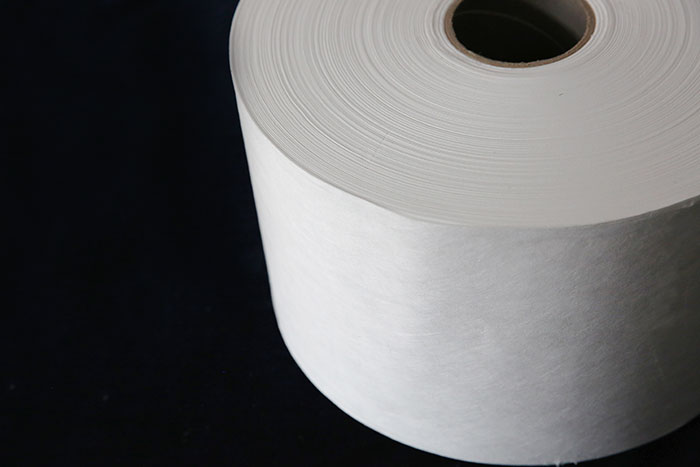
Infusing fibers with “magic”: Electret treatment
During the production process of melt-blown nonwoven fabric, a crucial “electret treatment” step is involved. This is akin to “electrostatically charging” each ultrafine fiber, endowing it with a long-lasting electrostatic charge.
You can imagine it like this: after combing your hair in winter, the comb can attract paper scraps. The meltblown fabric is a net woven by countless “micro-combs” with static electricity, and the particles in the air are those “paper scraps”.
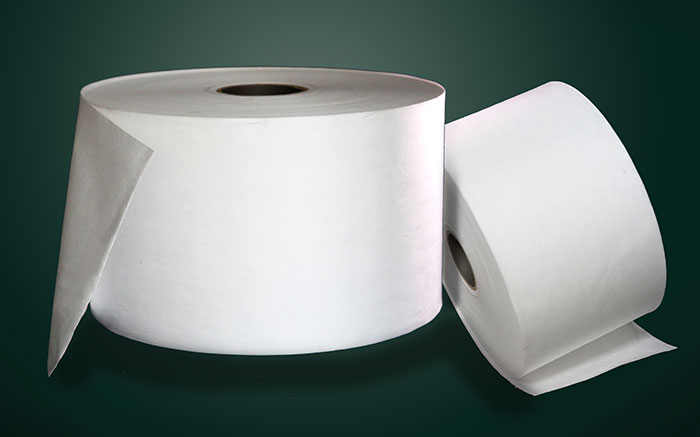
Three “Masterful Techniques” of Electrostatic Adhesion
The charged melt-blown fabric captures particles mainly through three ways:
- Electrostatic attraction: Utilizing the principle that opposite charges attract each other, charged particles (such as virus aerosols, which are typically negatively charged) are firmly “locked” onto fibers.
- Polarization effect: Even if particles are not charged, they will be polarized (with the separation of internal positive and negative charge centers) when exposed to a strong electrostatic field, and thus be adsorbed.
- Coulomb force effect: Charged fibers exert a strong Coulomb force on charged particles, enabling ultra-long-range capture.
Not just a mask, but also the cornerstone of high-end filtration
This filtration mechanism relying on static electricity (also known as “electrostatically enhanced filtration”) is highly efficient and has low resistance, ensuring the breathability of masks. More importantly, it is the core principle of almost all High-Efficiency Particulate Air (HEPA) technologies. From sterile operating rooms and ICUs in hospitals, to dust-free production workshops for electronic products, and to household air purifiers, the essence of their internal filters is a piece of melt-blown material that has undergone careful electret treatment.
Therefore, the power of meltblown fabric lies not only in its dense “physical barrier”, but also in its precise capture through “electrostatic magic”. This “thin as cicada wings” material is an outstanding example of humans cleverly utilizing microscopic physical laws to safeguard their health.